- 23 Jan 2027 to 10 Apr 2027
- 12 Weekends
- Blended (Online + On-campus)
- Certificate from CEPT University
- INR 75000 + GST
(For details on the Organisational Group Discount, please refer to the program brochure.) - Designed for architects, engineers, project managers, consultants, and construction leaders seeking to move beyond BIM software proficiency and leverage integrated digital technologies for smarter project delivery, intelligent construction, and data-driven decision-making.
About
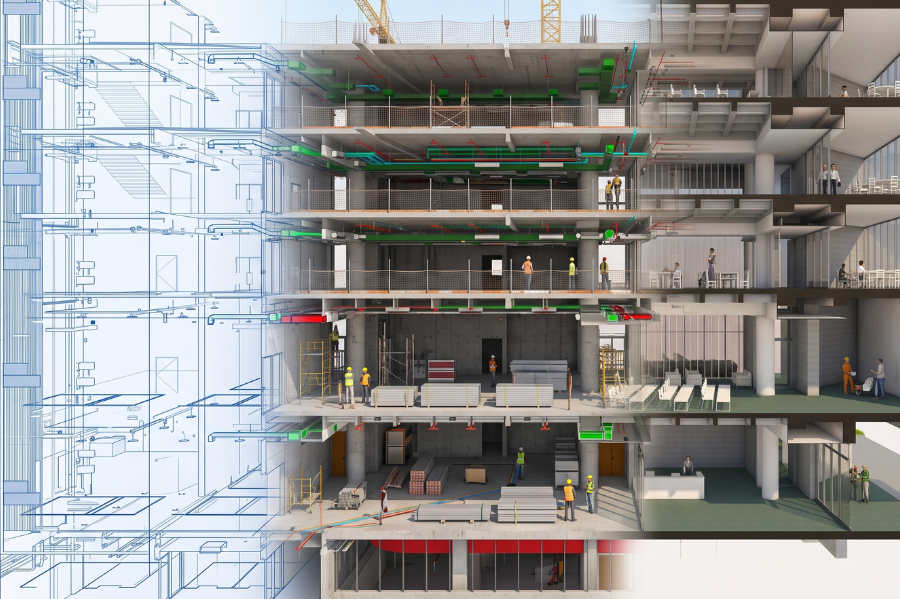
The built environment is rapidly embracing digital transformation, with Building Information Modelling (BIM) at its core. This Professional Certificate Program on BIM to Digital Project Delivery equips professionals to leverage BIM and emerging digital technologies to enable integrated workflows, enhance collaboration, improve decision-making, and transform project delivery across the Architecture, Engineering, Construction and Facilities Management (AEC/FM) sector.
The program introduces the fundamentals of BIM and explores its integration with emerging technologies such as Artificial Intelligence (AI), the Internet of Things (IoT), Blockchain, and Digital Twins. Moving beyond software proficiency, it focuses on how these technologies can transform project management, streamline coordination, strengthen risk management, improve productivity, reduce inefficiencies, and enhance sustainability and asset performance across the project lifecycle.
Program Faculty

Dr. Jyoti Trivedi
Construction Management & BIM Specialist
Senior Assistant Professor, MCEM-Program, Faculty of Technology, CEPT University
Hetal Mistry
BIM & Technology Implementation Specialist
BIM Lead, HCP Design, Planning & Management Pvt. Ltd., Ahmedabad.
Purvesh Raval
Construction Management & Value Engineering Specialist
Assistant Professor, MCEM-Program, Faculty of Technology, CEPT UniversityGuest Speakers

Jugal Makwana
BIM & Digital Transformation Specialist
Board Member | OpenBIM, Digitalization, Consulting Engineering | Digitalising Sustainability | Digital Construction; Netherlands
Dr. Ranjith K. Soman
Digital Construction & Construction Informatics Specialist
Assistant Professor of Digital Construction, Delft University of Technology (TU Delft)
Dr. Zofia K. Rybkowski
Lean Construction & Integrated Project Delivery Specialist
Professor & Harold Adams Interdisciplinary Professor of Construction Science, College Station, Texas, United States
Dr. Shang Gao
Lean Construction & Collaborative Project Delivery Specialist
Senior Lecturer in Construction Management, Melbourne, Victoria, Australia
Sonali Dhopte
BIM & Architectural Design Specialist
Chief Strategy Officer I BIM Transformation Champion I Co-Founder, Excelize I Board Member CDCP India I VP Strategic Alliances TRWGC Chief Strategy Officer I BIM Thought Leader I BIM Transformation Champion I Co-Founder, Excelize I Board Member CDCP India
Dr. Amarnath
BIM & Digital Transformation Strategist
President, India BIM Association & Chairman – BIM, Forum of Critical Utility Services, Mumbai, Maharashtra, IndiaProgram Structure
-
Module 01: Digital Transformation in Built Environment
The built environment is undergoing a significant transformation driven by digital technologies, data integration and evolving project delivery practices. This module introduces participants to the changing landscape of the Architecture, Engineering, Construction and Facilities Management (AEC/FM) industry, highlighting the transition from conventional project workflows to integrated, data-driven approaches. It explores the value of digital transformation in enhancing collaboration, information management, productivity and decision-making across the project lifecycle. Through industry case studies and an introductory hands-on demonstration, participants will understand how Building Information Modelling (BIM) and emerging digital technologies are creating new opportunities for efficient and connected construction practices. Key focus area of the module will be: i)Introduction to Digital Transformation: traditional to digital workflows ii) Value creation in data-driven construction. Case Study Discussion. By the end of this module, participants will be able to: Explain the drivers and significance of digital transformation in the built environment. Differentiate between conventional and digitally integrated construction workflows. Identify opportunities for data-driven decision-making and digital technology adoption across the project lifecycle.
-
Module 02: BIM and Design Coordination (Virtual Design and Construction - VDC)
This module introduces the principles of Building Information Modelling (BIM) and Virtual Design and Construction (VDC) as integrated approaches to multidisciplinary design coordination and project delivery. Participants will explore BIM fundamentals, information management principles aligned with ISO 19650, and the role of digital models in facilitating collaboration among architectural, structural and MEPF-(Mechanical, Electrical, Plumbing, Fire-fighting) disciplines. The module focuses on model coordination, identifying design inconsistencies, clash detection and resolution, and improving information exchange through collaborative digital platforms. Through industry examples and software demonstrations, participants will understand how BIM-enabled VDC workflows support coordinated design decisions, reduce rework and enhance project delivery efficiency.
-
Module 03: BIM Hands-on towards Model Coordination
This module provides practical, hands-on experience in developing and coordinating BIM models using a real-world building or infrastructure case project. Participants will work with provided BIM models, datasets and guided tutorials to understand the process of model development, information integration and multidisciplinary coordination. The module focuses on exploring model elements, reviewing discipline-specific information, identifying coordination issues and understanding the workflow for model integration and verification. Through guided exercises and software demonstrations, participants will gain practical exposure to BIM-based coordination workflows and understand how coordinated digital models support effective communication, design validation and informed project decision-making.
-
Module 04: BIM Model to Project Control
This module explores how Building Information Modelling (BIM) can be integrated with project planning, scheduling, cost estimation and construction execution controls. Participants will understand how digital models can be linked with project schedules and cost information to support 4D construction planning and 5D cost management. The module introduces the use of BIM-based workflows for visualising construction sequences, monitoring project progress, analysing resource requirements and managing lifecycle project information. Through practical demonstrations and industry case studies, participants will explore how BIM-enabled project controls improve construction planning, execution monitoring, coordination and informed project decision-making.
-
Module 05: Smart Construction: Introduction to IoT and Smart infrastructure
This module introduces the role of the Internet of Things (IoT) and connected technologies in enabling smart construction practices and intelligent infrastructure management. Participants will explore how sensor-based systems and real-time data capture can support construction site planning, execution monitoring, safety management and productivity improvement. The module focuses on understanding how site-generated data can be collected, analysed and visualised through digital dashboards to compare planned versus actual project performance. Through industry case studies and a practical dashboard development exercise, participants will understand how IoT-enabled monitoring contributes to data-driven project controls, operational efficiency and smarter infrastructure management.
-
Module 06: Blockchain & Smart Contract for Construction
Blockchain technology and smart contracts offer opportunities to improve transparency, traceability, trust and accountability in the construction industry. This module introduces the fundamentals of blockchain and explores their potential applications across construction project delivery and asset management. Participants will understand how decentralised digital records can support secure information sharing, contract administration, payment certification, procurement, material traceability and project transactions. The module also examines how smart contracts can automate predefined contractual conditions, approvals and payment processes. Through industry case studies and practical demonstrations, participants will explore the benefits, limitations and implementation challenges of blockchain-enabled construction workflows.
-
Module 07: Reality Capture for Construction: Scan to BIM
This module introduces reality capture technologies and their applications in documenting existing site conditions and generating digital representations of physical assets. Participants will explore the fundamentals of 3D laser scanning, point cloud data, photogrammetry and the Scan-to-BIM workflow. The module focuses on understanding how captured site information can be processed, interpreted and integrated into BIM environments to support existing-condition documentation, construction planning, site verification and project controls. Through industry case studies and demonstrations, participants will understand how reality capture enhances the accuracy of site information, supports informed decision-making and bridges the gap between physical construction environments and digital project workflows.
-
Module 08: AI in Construction Project Management
This module explores the emerging applications of Artificial Intelligence (AI) in construction project management, focusing on data-driven analysis, automation and intelligent decision-making across the project lifecycle. Participants will understand how AI can support project information and document processing, identify potential project risks, analyse construction schedules and enhance project control processes. The module also introduces AI-assisted decision support and the emerging role of AI agents in automating construction-related workflows. Through industry case studies and practical demonstrations, participants will explore how AI can transform conventional project management practices, improve information accessibility, support predictive insights and enhance project monitoring and decision-making.
-
Module 09: Digital Twin and Asset Lifecycle Management
This module introduces the concept of Digital Twins and their application in managing buildings, infrastructure and assets throughout their lifecycle. Participants will explore how BIM models, Internet of Things (IoT), real-time data and analytics can be integrated to create intelligent digital representations of physical assets. The module focuses on understanding how digital twins support project monitoring, asset performance evaluation, predictive maintenance and operational decision-making. Through industry case studies and demonstrations, participants will examine the transition from BIM-based project delivery to data-connected asset management and understand the potential of digital twins in improving operational efficiency, sustainability and lifecycle performance.
-
Module 10: Digital Transformation Strategy and Change Management
Digital transformation in the Architecture, Engineering, Construction and Facility Management (AEC/FM) sector requires more than adopting digital tools; it involves strategic changes in organisational processes, people, workflows and project delivery practices. This module introduces participants to the principles of developing and implementing a digital transformation strategy within construction organisations and projects. It explores digital readiness, technology adoption, organisational change, leadership, and the integration of digital processes across the project lifecycle. Through industry case studies and practical exercises, participants will learn to identify transformation opportunities, assess organisational challenges and develop a roadmap for effective digital implementation.
-
Module 11: Lean and Collaborative Project Delivery
Lean and collaborative project delivery focuses on improving construction productivity, reducing waste and creating reliable workflows through integrated planning, coordination and automation. This module introduces participants to Lean Construction principles and collaborative delivery approaches, including the Last Planner System (LPS), pull planning, constraint management and continuous improvement. It explores how digital technologies, BIM-based coordination, Common Data Environments (CDEs) and workflow automation can support information flow, decision-making and project execution. Through practical exercises and industry examples, participants will understand how to integrate Lean practices with digital tools to improve workflow reliability, enhance collaboration and achieve more predictable project outcomes.
-
CAPSTONE
The capstone project provides participants with an opportunity to integrate and apply the concepts, technologies and workflows explored throughout the programme to a real-world or simulated construction project. Participants will develop a digital construction strategy demonstrating how technologies such as BIM, Common Data Environments (CDE), IoT, AI, Digital Twins and workflow automation can improve project delivery and asset management. The on-campus session will focus on the submission, presentation and evaluation of project outcomes. Participants will present their proposed digital solutions, demonstrate their practical applicability and receive feedback from faculty and industry experts.
Applications and Admissions
Designed for architects, engineers, project managers, consultants, and construction leaders seeking to move beyond BIM software proficiency and leverage integrated digital technologies for smarter project delivery, intelligent construction, and data-driven decision-making.
Last date to apply 15 Jan 2026
Apply NowSample Certificate