- 12 Dec 2026 to 09 Jan 2027
- 4 Weekends I 6 Days
- Blended (Online, On-site, and On-campus)
- Certificate from CEPT University
- INR 30000 + GST
Early Bird discount of 5,000/- is applicable till 15 November 2026
(Discounts: For Early bird, Alumni and Group Discounts refer to the brochure) - This program is open to professionals, researchers and educators working in heritage conservation, architecture, design, civil and structural engineering or any other field allied to built-environment
About
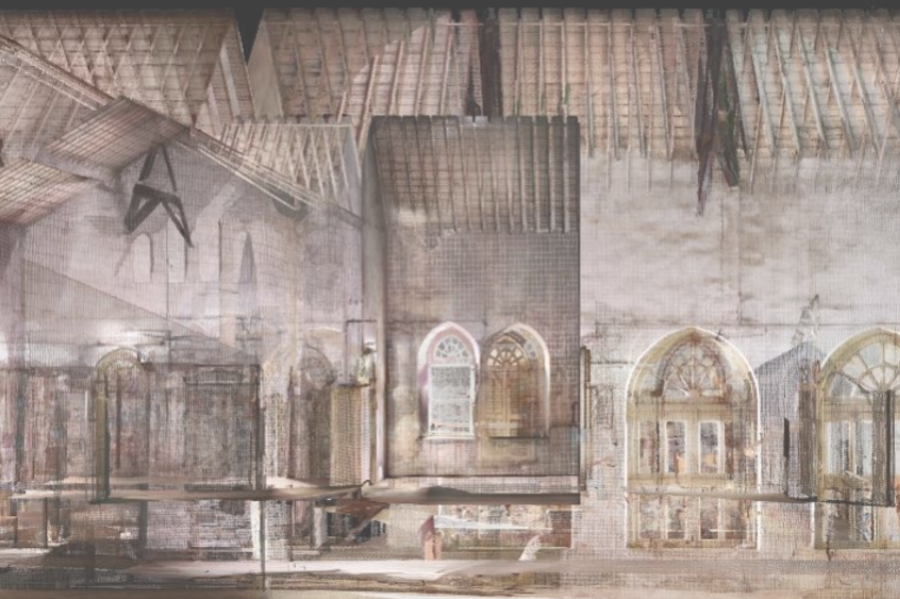
Curated by the Centre for Heritage Conservation (CHC), CRDF, the Digital Documentation Course introduces participants to the principles, methods, and contemporary technologies used to document historic environments. The course views the historic site as an archive and a primary source for research, emphasising accurate documentation as a foundation for conservation, heritage studies, and historic interpretation.
Through a combination of expert-led lectures and on-site experience, participants will explore the principles and ethics of heritage documentation and learn techniques with hands-on Photogrammetry, and Terrestrial 3D LiDAR scanning. The programme also covers data management, software workflows, processing methodologies, and the generation of accurate digital outputs.
Conducted at heritage sites in Ahmedabad, the programme is offered in collaboration with the Ahmedabad World Heritage City Trust (AWHCT). Site-based learning, case studies, and reflective discussions will enable participants to understand how different digital documentation techniques can be integrated to improve the accuracy, quality, and efficiency of documentation.
The programme is structured around three interlinked modules:
•Principles and Methods of 3D Digital Documentation
•Field Data Collection
•Integrated Approach to Post-processing and Visualisation
The course aims to equip participants with an integrated understanding of digital documentation and insights into optimising time and effort while documenting historic built environments.
Program Faculty
Bhargav Padhiyar
Digital Heritage Professional
Faculty, CEPT University
G M Srivishal
Architect and Architectural Historian
Research Associate, CHC, CRDFGuest Speakers
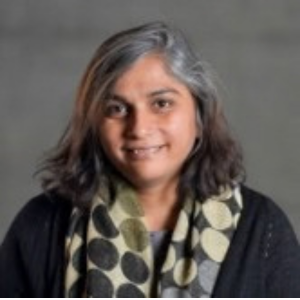
Jigna Desai
Architectural Conservation Expert
Professor, CEPT University, Centre Head, CHC
Pallavee Gokhle
Specialist in GIS Remote Sensing
Consultant for Architectural conservation and Archaeological Research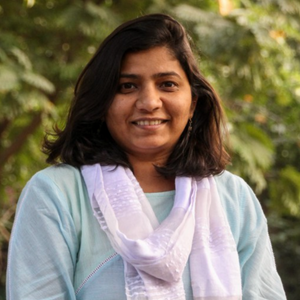
Mrudula Mane
Conservation Architect, Digital Documentation Expert for Built Heritage
Doctoral Scholar, CEPT University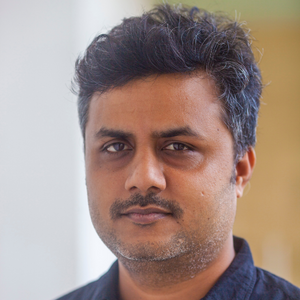
Maniyarasan R
Professor, CARE School of Architecture
Heritage Documentation Specialist
Bernadette Devilat
Heritage Reconstruction Expert
Assistant Professor, University of Nottingham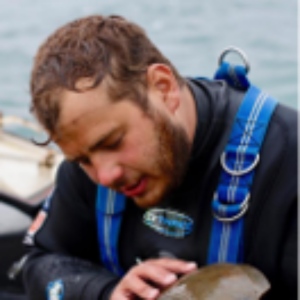
Felix Pedrotti
Maritime Archaeology and Digital Cultural heritage Expert
Post Doctoral researcher, University of SouthamptonProgram Structure
-
Module 01 - Principles and methods of digital documentation
The workshop will commence with an input session by the subject experts on ethics of documenting built heritage and proceed with theoretical introduction to the digital techniques used for documentation. An overview of principles, methods and key considerations for engaging with a historic built environment will be provided in this module. Continuing the ethics and principles, this module will introduce the participants to the works of professionals who are engaged in digital tools as their inquiry to heritage and history.
-
Module 02 - Site visit and data collection
The second module is dedicated to systematic, hands-on data collection for the built heritage through photography, photogrammetry and 3D LiDAR scanning. It aims to inform participants about selecting appropriate cameras and settings, understanding light conditions as per the site situations, and capturing information in different formats as per output requirements. The participants will capture photographs to generate photogrammetric output, as demonstrated by the subject experts. Alongside photogrammetry, a demonstration of 3D LiDAR scanning will be given, and participants will collect point cloud data with a laser scanner of Center for Heritage Conservation. The demonstration will consist of understanding the scanner and its interface, planning the data collection sequence as per site conditions, and optimising quantity and quality during field data collection.
-
Module 03 - Integrated approach for post-processing and visualisation
The last module will focus on developing a 3D model of the historic structure by integrating 3D LiDAR and Photogrammetric data in corresponding software. It will include methodical data transfer from equipment to processing platforms, data organisation, pre-processing, registration and integration of differential data sets to generate a base model for vectorisation and visualisation.
Applications and Admissions
05 Dec 2026
The deadline for this program is indicative. All applications will be considered as they are received, and seats will be allotted on a first come first serve basis.
Admissions will be closed once all seats are full.
Last date to apply 05 Dec 2026
Apply NowSample Certificate