- 16 Jan 2027 to 16 May 2027
- An 18-week blended learning program comprising 17 weeks of weekend live online sessions and one week of immersive on-campus learning at CEPT University.
- Blended (Online + On-campus)
- Certificate from CEPT University
- INR 110000 + GST
Early Bird Fee: Rs.90,000 + GST
Applicable for registrations on or before 31 December 2026 - A degree or diploma in Architecture, Design, Media, Animation, or a related discipline is preferred. Candidates with relevant professional experience may also be considered on a case-by-case basis. Basic familiarity with any 3D modelling software is recommended. No prior experience with Unreal Engine is required.
About
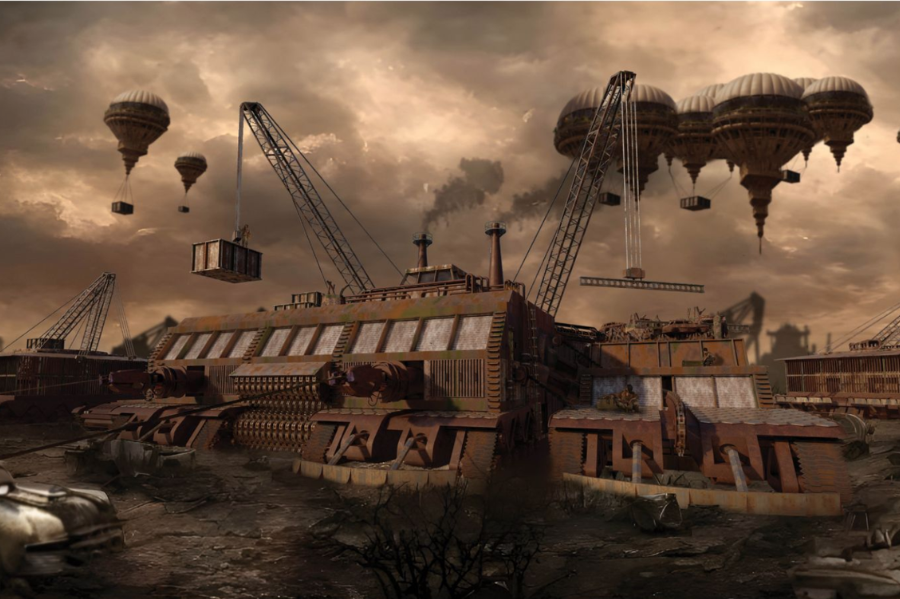
As design expands across physical and virtual environments, advanced digital technologies are transforming how we imagine, develop, test and communicate spatial ideas. What if you could not only visualise designed environments, but also virtually build, experience and refine them in real time?
Prototyping Virtual Worlds is a studio-based professional programme that brings together speculative design, systems thinking, AI integrated workflows, advanced 3D visualisation and immersive technologies to explore and prototype alternative possibilities. Participants learn to question existing conditions, understand the relationships that shape them and anticipate how environmental, social and technological changes could generate alternative futures. Using fictional worlds and speculative scenarios as creative testing grounds, participants develop original design propositions through scenario building, systems mapping, storyboarding and spatial exploration. These ideas are translated into detailed 3D environments through digital modelling, kit bashing and AI-assisted workflows, before being assembled in Unreal Engine/ blender for real-time visualisation. Through immersive VR experiences, participants step into their designed environments to evaluate spatial decisions, test possibilities and refine their propositions. The programme develops transferable skills in critical design thinking, advanced digital visualisation and immersive spatial communication, while retaining creative judgement and control. Program culminates with a speculative design alternative, brought to life through a short cinematic 3D visualisation.
Program Faculty

Shikha Parmar
Architect, Pedagogist & Speculative Designer
World Building | Interdisciplinary Design Frameworks | Alternative FuturesAssistant Professor, CEPT University
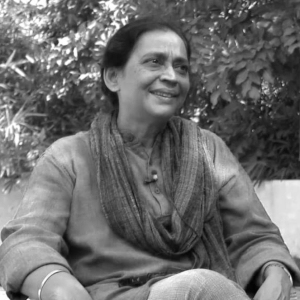
Binita Desai
Animator, Designer and Educator
Storytelling in Sequential ArtPG Animation program's design for NID
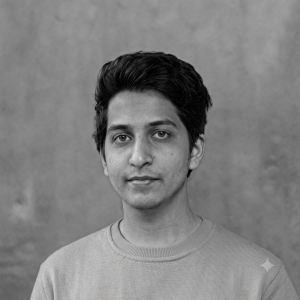
Dhruv Shah
Architect and Urban Strategist
Worldbuilding FrameworksVisiting Faculty, CEPT University

Ronak Soni
Game Designer and Digital Visualiser
Realtime Visualisation in UnrealVisiting Faculty at SEA
Guest Speakers

Daniele Pasin
Architect, Graphic Novelist and Illustrator
Narratives and Visual Language in Graphic Novels
Gomathi Shankar
Game Developer and Programmer
Game Design and PracticeCofounder - Dwarven Brothers Studios

Kedar Undale
Architect, Computational designer &
AI expert
Blending AI and Parametric Design Tutor at Futurly, The Paacademy
Program Structure
The program follows an inquiry-led, studio-based pedagogy that positions participants as critical thinkers and makers rather than merely software users. Learning advances through guided experimentation, iterative design, peer exchange and expert critique. Demonstrations of digital workflows and conversations with professionals offer insight into the evolving landscape of practice. Fiction provides a shared context for questioning real systems, while responsible AI and immersive digital tools reinforce human judgement and bring complex imagined possibilities to life.
-
Module 1 : Visualise: Visual Narratives and Future Scenarios
This module introduces worldbuilding as a way to draw from existing conditions to anticipate future possibilities and develop alternative design approaches and propositions. Participants examine imagined worlds in science-fiction films to understand their underlying logic: how ecology, technology, society, and culture connect and what alternative conditions might emerge. They then apply this causal way of thinking to real-world design questions. Mind mapping and storyboarding help organise relationships and ideas into clear spatial narratives. AI-assisted tools speed up visual exploration, test alternatives, and maintain a consistent visual language across images and sequences.
-
Module 2 : Built: Manifest Design Thinking through Digital Tools
This module translates visual narratives into three-dimensional environments through digital modelling, kitbashing and spatial composition. Participants develop architectural and environmental components, test relationships between scale, form and space, and refine their design propositions through iterative modelling. Digital tools become instruments for thinking and making, rather than simply representing a finished design. Participants prepare coherent 3D scenes for real-time assembly and visualisation.
-
Module 3 : Inhabit: Communicate Real-Time Immersive Environments
This module brings imagined environments to life through real-time visualisation using Unreal Engine. During the on-campus immersion at CEPT’s Advanced Digital Lab, participants assemble and refine their 3D environments, exploring materials, lighting, scale, atmosphere and cinematic framing. Through VR, they step inside their proposals at full scale, evaluate spatial relationships and experience how design decisions influence the environment. This immersive process allows participants to critically review and refine their designs in real time.
Applications and Admissions
A degree or diploma in Architecture, Design, Media, Animation, or a related discipline is preferred. Candidates with relevant professional experience may also be considered on a case-by-case basis.
Basic familiarity with any 3D modelling software is recommended.
No prior experience with Unreal Engine is required.
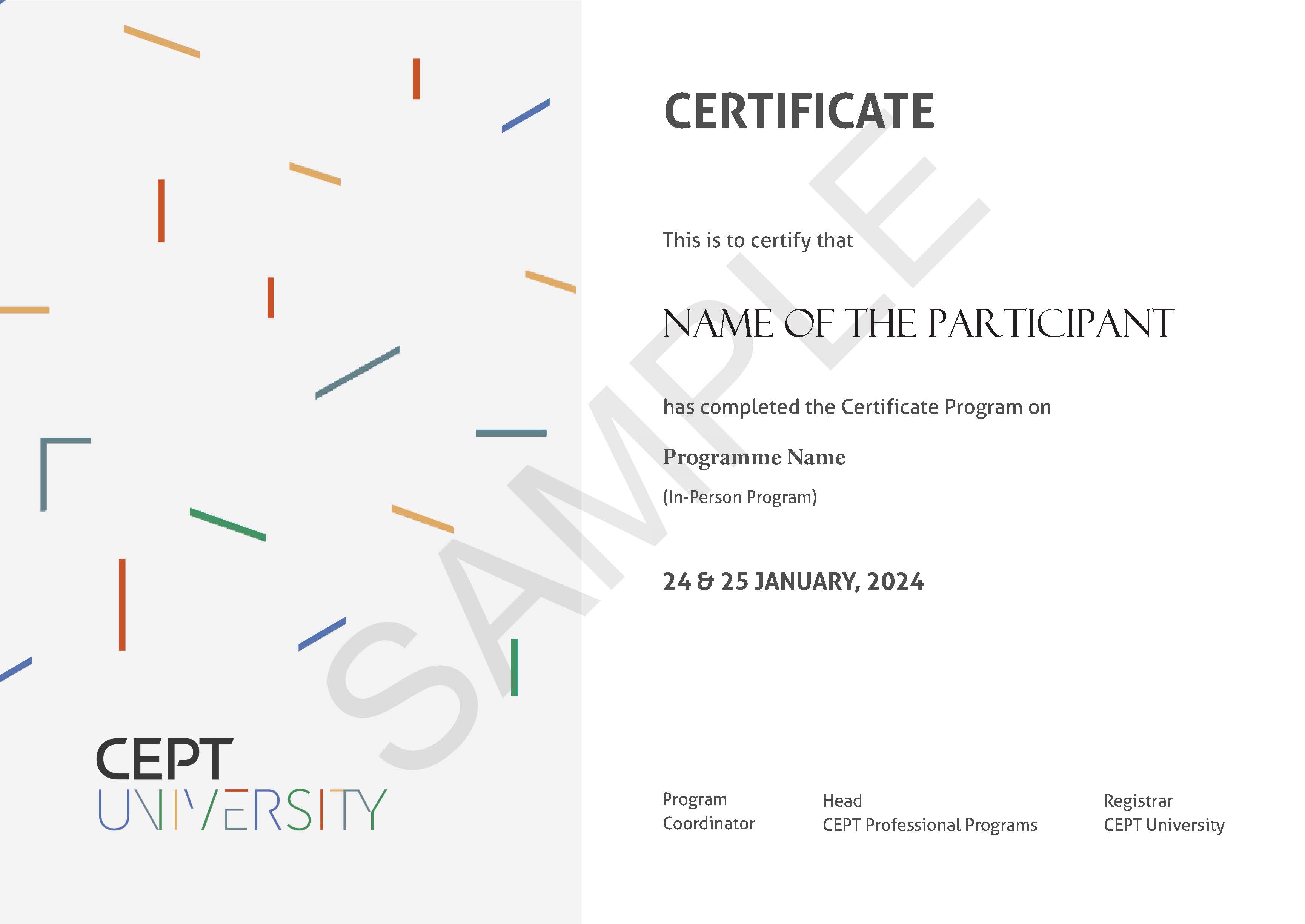
Participants will receive a certificate from CEPT University on successful completion of program requirements along with a minimum 80 perfect attendance.
Last date to apply 07 Jan 2027
Apply NowSample Certificate