- 05 Dec 2026 to 06 Feb 2027
- Six weeks I Blended – Online + On-site
- Blended – Online + On-site | Thailand
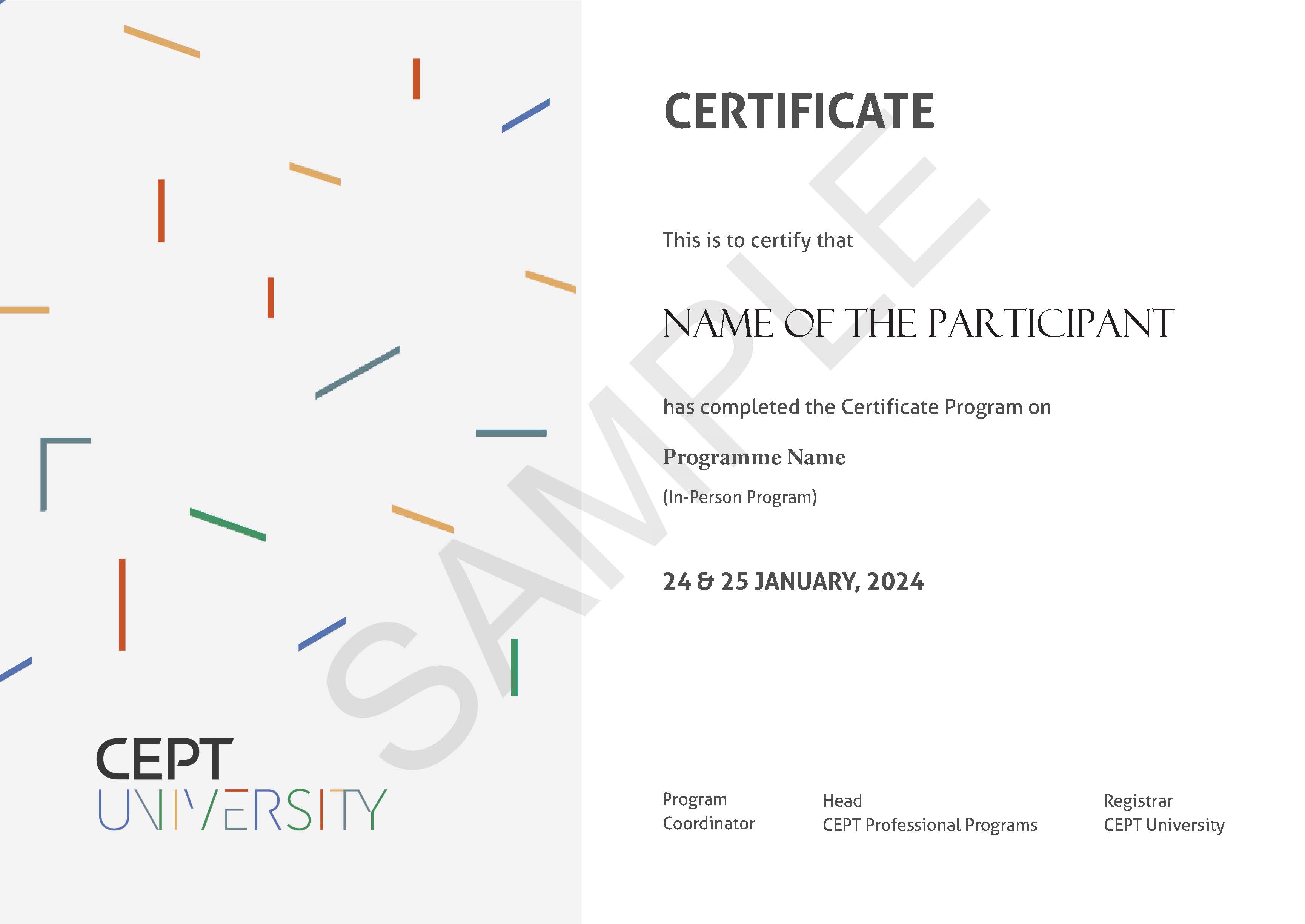
- Certificate from CEPT University
- INR 59000 + GST
Early bird program fee is INR 50,000/- (Applicable till 31 October 2026)
A group discount of INR 5,000/- on the above-mentioned fee is available for nominations of three or more participants from the same organisation.
Note: The program fee includes tuition fees and local transportation during the on-site module. Participants will be responsible for their international travel, accommodation, meals, and other personal expenses. - Designed for professionals shaping the future of tourism.
Government & Policy | Tourism & Hospitality | Destination Management | Consulting & Advisory | Tourism Development | Academia & Research
About
Tourism in India is growing rapidly, making its destination impacts increasingly visible. Its growth has raised concerns about socio-economic and environmental pressures, yet tourism planning and management receive limited formal training. Tourism institutes often approach the field through hospitality, while planning schools have not fully addressed tourism as a major driver of urban and regional change. This course addresses this gap by equipping professionals with practical, applied skills to plan, manage, and develop tourism destinations in India, focusing on:
- Sustainable and responsible tourism
- Destination competitiveness
- Visitor experience design
- Policy and governance
- Community and stakeholder engagement
Product development and investment readiness
The course is aimed at upskilling a mixed cohort of professionals coming from various disciplinary backgrounds, including planning, management, architecture, landscape, heritage, geography, and humanities.
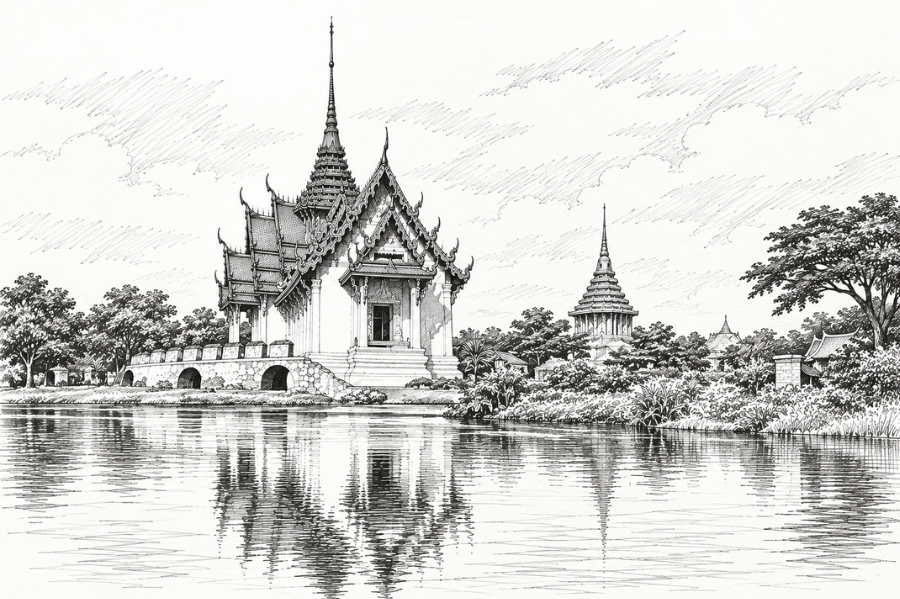
The course is based on a hybrid approach with a capstone field trip to Thailand, a major asian tourist destination that has integrated tourism into its development agenda, advanced sustainable destination management, and supported community-based responsible tourism.
Visiting different kinds of sites, the participants will explore tourism processes through resource inventories, field observations, and interactions with several stakeholders, including officials from the Tourism Authority of Thailand, Bangkok Metropolitan Authority, corporate tour companies, community organisations, and local community leaders.
Program Faculty

Dr. Kiran Shinde
Tourism Planning, Urban Planning, Heritage Management Specialist
Adjunct Associate Professor, La Trobe University, AustraliaGuest Speakers
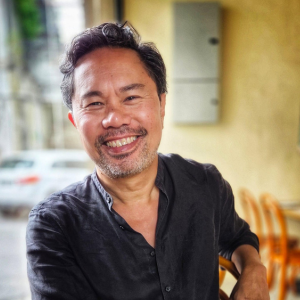
Joseph M. Cheer
Sustainable Tourism, Destination Governance, Tourism Resilience Specialist
Professor, Western Sydney University, Australia
Dallen Timothy
Heritage Tourism, Religious Tourism, Heritage Management Specialist
Professor, Arizona State University, USA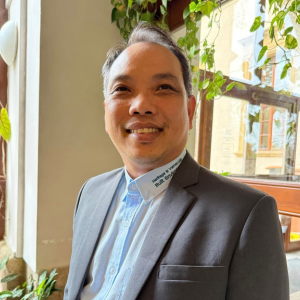
Kreangkrai Kirdsiri
Architectural Heritage, Heritage Conservation, Cultural Tourism Specialist
Associate Professor, Silpakorn University, ThailandProgram Structure
-
Module 01: India’s Visitor Economy and tourism
This session will introduce participants to India’s visitor economy and the broader tourism industry, with attention to key international and domestic tourism trends. Some of the popular tourism activities include religious tourism, leisure tourism to hill stations and coastal destinations, travel linked to festivals, cultural events, adventure activities, and self-drive routes. The session will also introduce the overarching structure of tourism industry outlining how government agencies, private-sector actors, and communities interact within the tourism system. It will highlight the relationships between state actors with tour operators, hotels, guides, community groups, and residents in tourism promotion and management through activities such as developing itineraries, managing visitor flows, and creating destination-level visitor experiences.
-
Module 02: Tourism Policy, Governance & Regulation
This session will examine tourism policy, governance, and regulation by introducing participants to national and state tourism policies, regulatory frameworks, and the institutional arrangements that shape tourism planning and management. It will discuss the roles of key tourism planning institutions and explain core policy and planning concepts that will help understand how government priorities, regulatory requirements, and institutional responsibilities guide tourism development at national, state, and local levels. This will contextualise how destination-development plans align with broader urban and regional planning objectives. Attention will be given to how guidelines, safety standards, accreditation systems, and planning procedures influence the development and operation of tourism destinations.
-
Module 03: Destination Planning & Spatial Thinking
This session covers concepts around destination planning and spatial thinking by examining how tourism destinations evolve over time, compete with one another, and require coordinated planning to remain sustainable and attractive. These include core destination planning principles and spatial planning tools such as zoning, carrying-capacity assessment, and visitor-flow mapping, enabling participants to understand how spatial decisions influence accessibility, conservation, visitor experience, infrastructure provision, and local development outcomes. Case studies from comparable tourism destinations will be used to demonstrate how these concepts are applied in practice. Different methods will be discussed for mapping tourism assets, including heritage sites, natural landscapes, cultural resources, local institutions, and community-based attractions.
-
Module 04: Tourism Products & Visitor Experience
This session will examine tourism products and visitor experience by introducing different forms of tourism, including heritage tourism, religious tourism, eco-tourism, adventure tourism, and rural tourism. It will explore how visitor experiences and itineraries are designed to connect attractions, services, interpretation, mobility, and local engagement into coherent tourism offerings, such as a one-day cultural trail that combines a monument visit, guided storytelling, local food, craft demonstrations, and community interaction. It will also discuss the role of interpretation and storytelling in enhancing visitors’ experience and understanding of places, cultures, landscapes, and communities. Emphasis will be on designing inclusive and community-led experiences that respect local identities, foster community participation, and create benefits for communities.
-
Module 05: Tourism Operations & Destination Management
This session will focus on practical tools for day-to-day tourism operations and destination management, with emphasis on systems and practices that support efficient, safe, and high-quality visitor experiences. It will explain visitor management systems, hospitality and service-quality standards, and the use of digital tools such as GIS, dashboards, and social media monitoring to support destination-level decision-making. The session will also include topics related to risk, crisis management, and developing resilience in tourist destinations.
-
Module 06: International Site Immersion: Thailand
The field trip is focused on understanding stakeholder engagement and community participation as central elements of responsible tourism planning. Participants will study how government agencies, private-sector actors, communities, NGOs, local custodians, and tourism enterprises are identified, mapped, and involved in destination-level decision-making. They will be able to experience how competing interests around conservation, livelihood generation, infrastructure, visitor access, and community benefits can be discussed and managed in practice. The field trip will also help participants understand how visitor flows affect the sustainability of tourism destinations through observations at major cultural, heritage, riverine, ecological, and community-based tourism sites in and around Bangkok to destinations such as the Grand Palace, Wat Arun, the Temple of the Reclining Buddha, the World Heritage Site of Ayutthaya, canal-based community tourism routes, Koh Kret Island,, the ecological and cultural landscape of the Maeklong River estuary in Samut Songkhram, Chao Phraya River cruise.
Applications and Admissions
Applications are open. The program deadline is tentative, and applications will be reviewed on a rolling basis. Seats are allocated on a first-come, first-served basis, and admissions will close once all seats are filled.
Participants will receive a certificate from CEPT University on successful completion of the program.
Last date to apply 28 Nov 2026
Apply NowSample Certificate